Category Archives: New Posts

New and exciting posts from the best half decent blog around

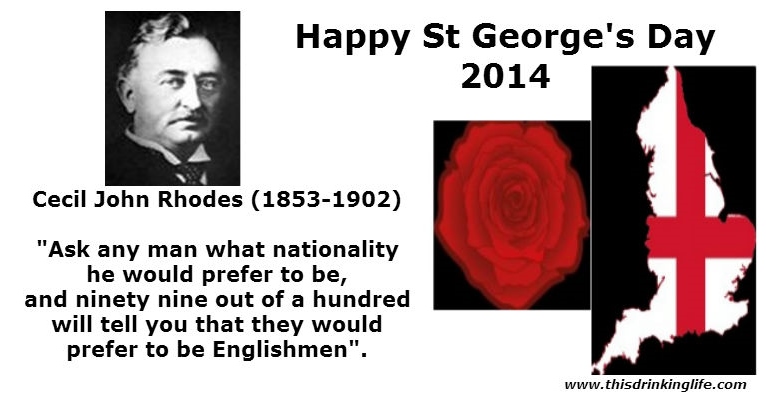
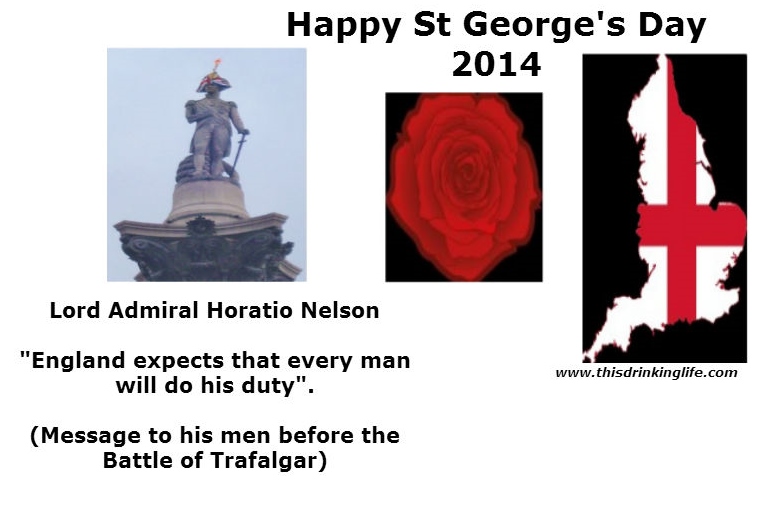
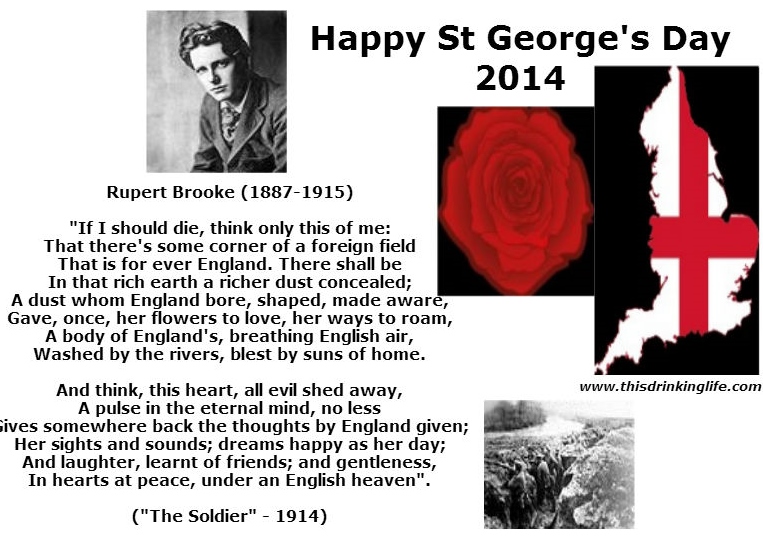
Happy St George’s Day

Happy St George’s Day 

red rose of England St George's Day

Red Rose of England

According to the think tank British Future English people are “too nervous” to celebrate St George’s day.

http://www.telegraph.co.uk/news/politics/10386386/English-too-nervous-to-celebrate-St-Georges-Day.html

Really! What a load of old horse manure. Wonder how many people they asked, and where?

The English can be the most jingoistic of nations when they want to be. Maybe if they redid this poll during the World Cup they might get a different reaction. Researchers and pollsters only get the results they want to get. Statistics and damn statistics.

The study showed that most people could remember the national day of the USA and Ireland over St George’s Day, England’s national day. Well of course they would, England doesn’t celebrate its national day in the same manner. It’s not even a public holiday, despite the fact that St. George has been the patron saint of England since the 15th century.

English on St George's Day

English

British Future, a body specifying in identity and integration which carried out the study, says the results show that many English people are too “nervous” to celebrate St George’s Day. Many people are worried that national symbols like the St George’s Cross flag may be viewed as racist, and that celebration of the national saint’s day could upset ethnic minority groups. What is racist, I ask you, in having a day to show your love for one’s country?


So Thisdrinkinglife have decided to do a write up on St George’s Day as we strongly think that English people should have this day as a national holiday and a day to fall in love with their country again. Sure crass overt nationalism, like the muppet’s in the EDL and BNP, do take the fun out of celebrating English culture, so let’s ignore them. But I would recommend a good English breakfast to start off the day, listening to Madness (insert your fav great British band from a list of hundreds) on a loop, have a few real English ales, go to a football game (Skrill conference south have a few games on), have a gamble on a few nags in the National Hunt, and don’t forget to wear your red rose, and have your flag of a St George’s cross: all these activities might awaken something inside you.

St George was also known for Charity, Courage and Chivalry. Perhaps bring your partner out for a nice meal (Roast Beef and Yorkshire Pudding?), donate to the Help For Heroes charity, and do not be afraid to shout out “Yes, I am English and proud”, but in a nice way least you get arrested!

dragon St George's Day

Dragon

One could also attend a public St. George’s Day celebration. Unfortunately the massive parade in West Bromwich was yesterday, but In Wolverhampton, the city’s mayor Councillor is holding a food-themed celebration on April 23 to raise cash for charities. He will be hosting a patriotic event in the Mayoral Suite to celebrate all things English. But you could try and see what, if anything, is happening in your local area. There must be something!

15,000 attended the event in West Bromwich which goes to show that there is definitely an appetite for a St George’s day civic event if done correctly. The WB parade has been going for 17 years and is funded privately from donations from the community. With no help from the local council!

http://www.expressandstar.com/news/2014/04/21/15000-on-streets-for-st-georges-day/

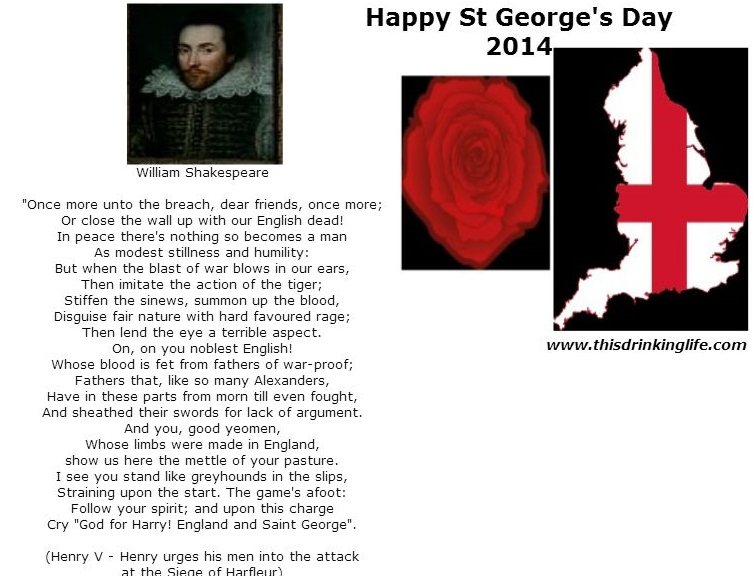
Must also remember that the 23rd April is William Shakespeare’s birthday. In his play Henry V, Shakespeare famously summons the Saint.

(Act III, Scene I): Prior to the battle of Agincourt:

“I see you stand like greyhounds in the slips, Straining upon the start. The game’s afoot: Follow your spirit, and upon this charge Cry ‘God for Harry, England, and Saint George!'”

Of utmost important, contact your MP to make (next) St. George’s Day a national holiday and ask why England’s national day is not a bank holiday.

But anyway let’s have a look at the history behind St George’s Day

Who was the real St. George? And why on the 23rd of April is he celebrated as the patron saint of England?

St George, born in and around the year 280 in what is now Turkey, was a brave Roman soldier who rose quickly through the ranks of the army, eventually becoming a personal sentinel to the Emperor Diocletian. He protested against the Romans’ torture of Christians, was executed for being a Christian on April 23, 303, and is buried in the town of Lod in Israel. The anniversary of his death is seen as England’s national day.

The popularity of St George in England comes from the time of the early Crusades when it is said that the Normans saw him in a vision and were victorious. Richard the Lionheart and his knights brought the colours, imagery, and tales of St George with them from the land of the Crusades back to England.

England isn’t the only country that celebrates Saint George’s Day. Countries that celebrate St George’s Day include Bosnia and Herzegovina, Bulgaria, Canada, Croatia, Cyprus, Georgia, Greece, Macedonia, Romania, Malta, and Serbia. Cities include Genoa in Italy, Beirut in Lebanon, Catalonia, Valencia, and Majorca in Spain, and many others.

Why the dragon?

St George's Day

St George’s Day

One of the best-known stories about Saint George focuses mainly on the legend of Saint George on a horse as a knight carrying a shield or banner with a red cross, slaying a dragon to save a princess.

According to legend, the only well in the town of Silene was guarded by a dragon. To get water, the citizens of the town had to offer a human sacrifice every day to the dragon. On the day that St George was visiting, a princess was to be sacrificed. George took on the dragon, killing it, saving the princess and gave the people of Silene unlimited access to water. The residents of the small town, showing immense gratitude, immediately converted to Christianity.

You can believe in dragons all you want, but to this day St George is known throughout the world as the dragon-slaying patron saint of England.

Why the flag and the St George cross?

St George's Day A celebration of Englisness

City of London

The most widely recognized symbol of St George’s Day is his red and white cross, often displayed as a flag. It is the flag of England, and part of the British flag. Its origins in English folklore are from the time of the Crusades. St George’s emblem was adopted by English knights who used St George’s cross as part of their uniform, during the crusades in the 1100s and 1200s. The Knights considered the colours very lucky. Richard the Lion Heart brought the emblem to England in the 12th century. It has been the official flag of England for centuries.  Go to any major sporting occasion and you will see England fans proudly wave the flag of St George as they cheer on their country. It is also has a prominent place on the arms of the City of London and the flags of the city of Barcelona, Spain, and Genoa in Italy.

No Parades and celebration?

From the 15th century, St George’s Day used to be a national holiday in England, and was celebrated as widely as Christmas. The tradition of celebration St George’s day had waned by the end of the 18th century after the union of England and Scotland. In recent years the popularity of St. George’s Day appears to be increasing gradually. Organisations such as English Heritage and the Royal Society of Saint have been encouraging celebrations.  Since elected Mayor of London, Boris Johnson continually encourages the celebration of St. George’s Day. And every year now there is a celebration in Trafalgar square and within other areas of London.

http://www.visitlondon.com/things-to-do/event/8726328-feast-of-st-george-in-trafalgar-square

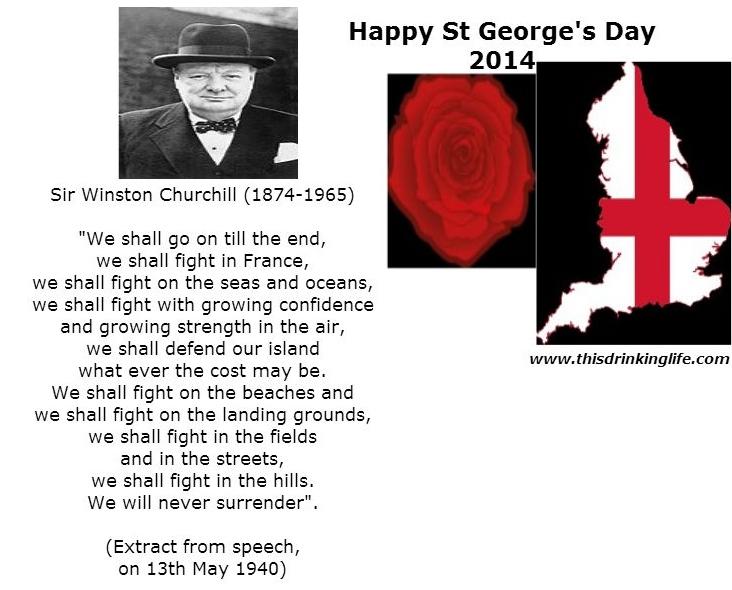
To further celebrate St George’s Day please take time to read our piece on that great Englishman, Winston Churchill

Winston Churchill

Winston Churchill

http://thisdrinkinglife.com/hell-raiser-3-winston-churchill/
Use Facebook to Comment on this Post

Cider - A Beginners Guide

Cider – A Beginners Guide

Rikki Hammond, in the excellent blog The Cider Drinker, has written for us a great beginners guide to cider.  This is a good introduction to the exciting world of cider drinking. Rikki writes regularly on all cider related news, and reviews, on video, all the best ciders, and some of the not so good, so I STRONGLY recommend you check out his website

The Cider Drinker Homepage> http://theciderdrinker.moonfruit.com

Rikki’s video reviews> https://www.youtube.com/user/Dormin87


Cider – A Beginners Guide

Apples and cider

All the lovely apples

Picture the scenario. You’ve popped to your local shop/off-license/pub to peruse what variety of alcohol they have on offer. You’ve been a beer drinker for most of your life, and decide that tonight’s the night you pop your cider cherry. You view the drinks on offer, and decide to go for the most eye-catching and cheapest one they have on offer.

After your purchase, you head back home/to your table, crack open the can or bottle and take your first sip of fermented apple juice……….and are promptly overwhelmed by a hideous taste that makes you almost gag, forcing you to tip the rest of the contents down the sink or palm it off to a mate.

That was my first experience with cider! Now, ten years down the line, my taste buds have developed, and to all you people who have had this same experience with cider, I say to you, give cider another chance!

Of course, everyone’s tastes are different, but most people have only tried the cheap, mass-produced ciders available, and probably think this is what all ciders taste like. This is most definitely not the case. So, where do you start looking for better tasting drinks? The answer, is right in the very shop or pub you bought your first cider from.

Different types of cider

There are literally hundreds, if not thousands of different apple varieties out there, and with this comes the ability to make a lot of different tasting drinks. But first off, we need to know the different types of ciders out there, these are as follows:

cider

Cider

 ‘White’ Ciders – The absolute bottom of the barrel, coming in at 6-10% ABV, no colour and usually smells and tastes of chemicals, perfect if you don’t care about taste and want to get wasted quickly, as they are usually dirt cheap

Mass-Marketed Ciders – The next step up, not naming any names, but you know the ones I mean. Usually 4-5% ABV, quite a pissy colour, and rather bland tastes in the mouth. Still cheap, although some companies try to rip you off big time, and probably the biggest type of cider people have tried.

Vintage Ciders – If you see the ‘V’ word on a bottle, it quite often means that the cider has been left to age (most likely in oak barrels,) and gives it a much deeper colour and stronger taste. Vintages usually come in between 7-8% ABV

Farmhouse/Scrumpy – Now we’re getting in to the big boys. A whole variety of tastes and colours are present in these ciders, and are almost always cloudy in appearance, due to the cider being unfiltered. This also means, you will probably get natural sediment in your bottle too. Again, these can range anywhere from 6-8% ABV normally.

‘Real’ Cider – The top end of the cider chain. Unfiltered, no artificial stuff added in, and no sugars. Just 100% pure apple juice left to ferment of it’s own natural causes, and almost always still not sparkling. The range of tastes and colours here are phenomenal, and the ABV can be anywhere from 3 to 8%.

Of course, this is just the tip of the iceberg (or ciderberg if you will,) as we can also get in to apple wines, apple brandies, pommeau, ice ciders and more, but we’ll stick with the basics for now.

With VS From

One thing I have noticed from drinking a lot of cider, is the wording on the bottle can plays a big part in whether the drink is going to be good or not, and it all comes down to two words, with and from.

the process in making cider

The process involved

If you spot ‘with’ plastered all over the bottle or can, this could mean that the drink has been made with apples, but also a lot of other crap thrown in too. All the company has to do is add one apple to the drink, then the rest can be concentrated apple juice, imported from another country, and they can still label it as cider, because it’s made ‘WITH’ that one apple.

If you see ‘from’ however, it’s usually accompanied with ‘100% apples’ or something similar. This, more often than not, means you’re getting the real deal, with no nasty additives thrown in, and makes for a much better tasting experience.

Other buzz-words to watch out for are ‘premium’, ‘refreshing’, ‘clean’ and ‘crisp’, as these usually indicate that the drink is going to be NONE of them, those words are merely there to whet your taste-buds, and to make you buy the drink, and then you will most likely be wholly disappointed with the end product.

The Next Step

Ok, so you’ve tried your hand at a few different ciders off the shop shelves, and have decided to have a pop at ‘real’ ciders. But where do you even begin? That’s where ale and cider festivals come in to play. More often than not, they will have a vast array of drinks on offer at very reasonable prices too. Find out where your nearest festival is held, and book a day to go and visit it with a couple of your mates, and let the adventure begin.

The festivals I’ve been to come in two flavours. Sometimes you will be given a beer card, which equates to £10, and you’re free to fill the card up with whatever drinks you want (you can even go back for a second one if you want,) or you simply walk in to the festival, and pay for the drinks as you normally would in a bar. Either way, you’re gonna get through a lot of drinks while you’re there. But which ciders to try?

cider drinking

Cider drinking

The best bet is to ask the guys behind the bar on their recommendations, and have an idea as to whether you’d prefer a sweet or dry tasting cider. The bar staff almost always allow you to have a little taster of a drink if you’re interested in it, and if you like it, they’ll fill up your glass from there. As you try out the ciders, you’ll find out for yourself which ones you do and don’t like, and can use this knowledge for when you take a trip to your next festival, because believe me, once you’ve been once, you’ll want to go again and again.

If you can’t afford to go to your local festival, have a look online to find out if any pubs are offering ‘real’ ciders, and try them there. You might end up paying a little more for them, but the end result will still be the same.

So as you can see, there’s more to cider than meets the eye. Once you’ve tasted a real cider for the first time, you’ll begin to wonder what you ever saw in those mass-marketed ciders in the first place, but the only way you’ll find out, is to go out there and expand your taste-buds!

Don’t forget to check out Rikki’s blog for all your cider related inquiries

http://theciderdrinker.moonfruit.com


Use Facebook to Comment on this Post

Beer Dictionary

A drinker’s dictionary

A drinker’s dictionary

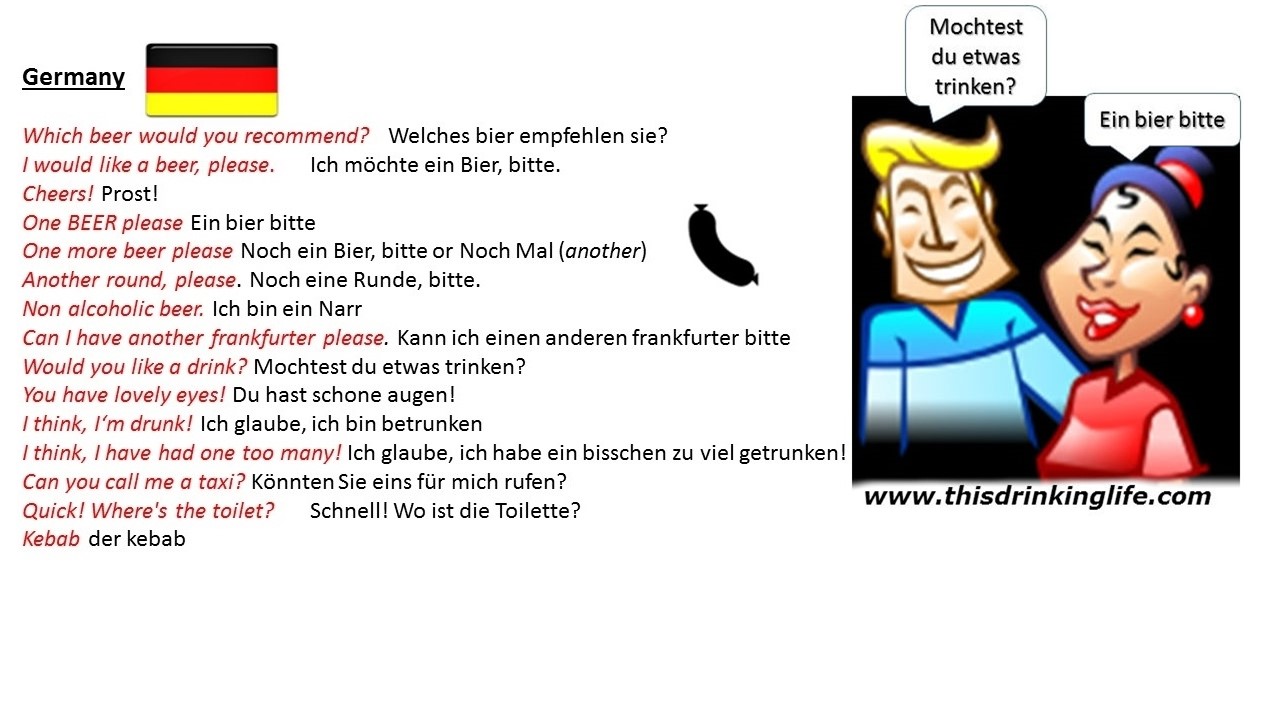
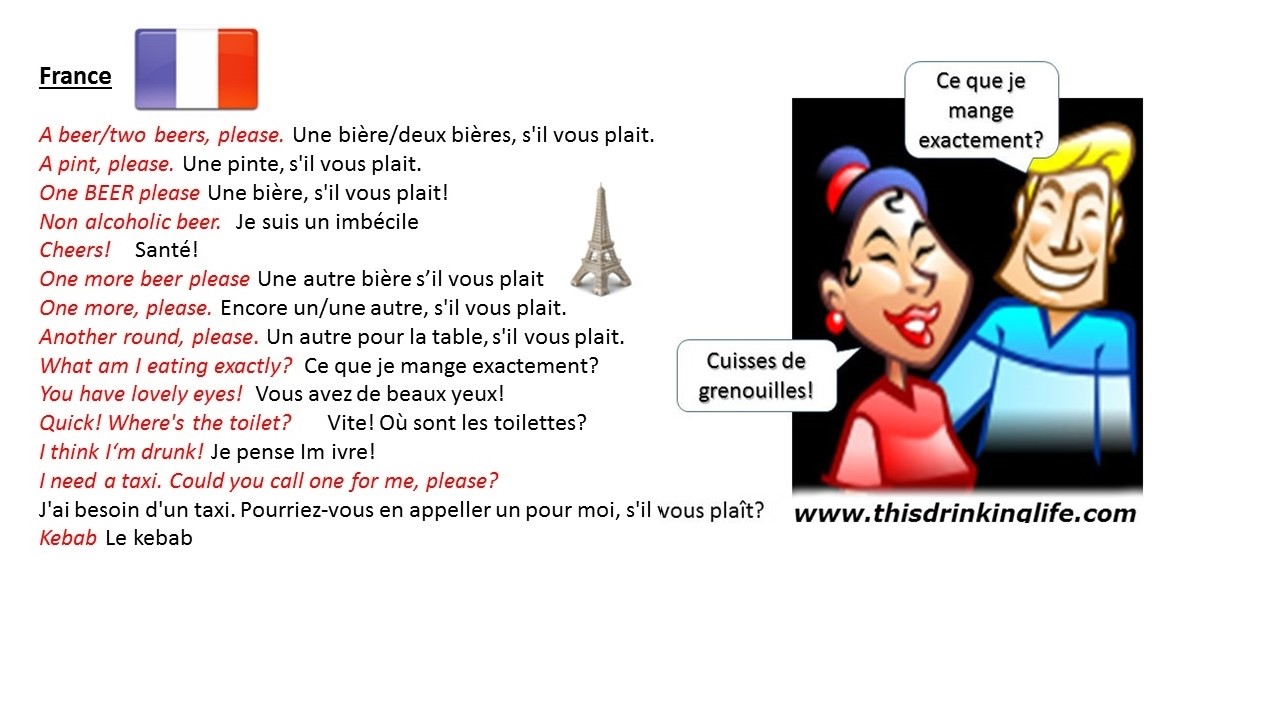
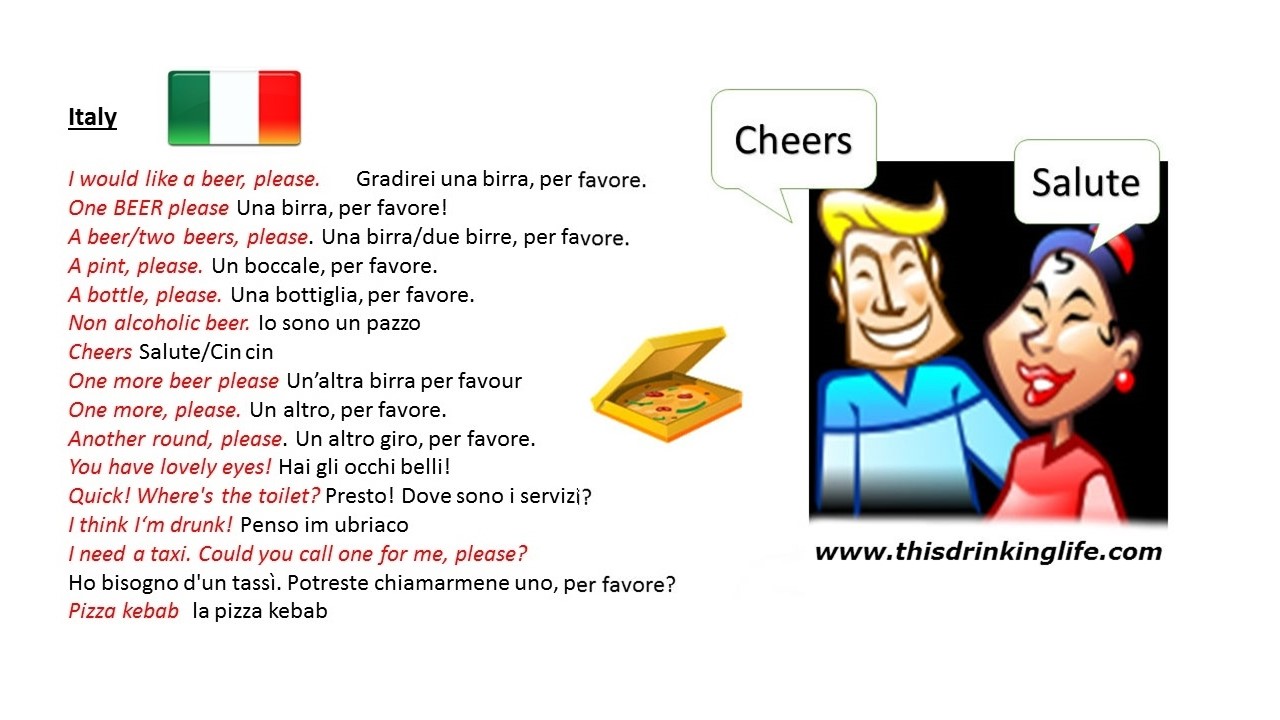
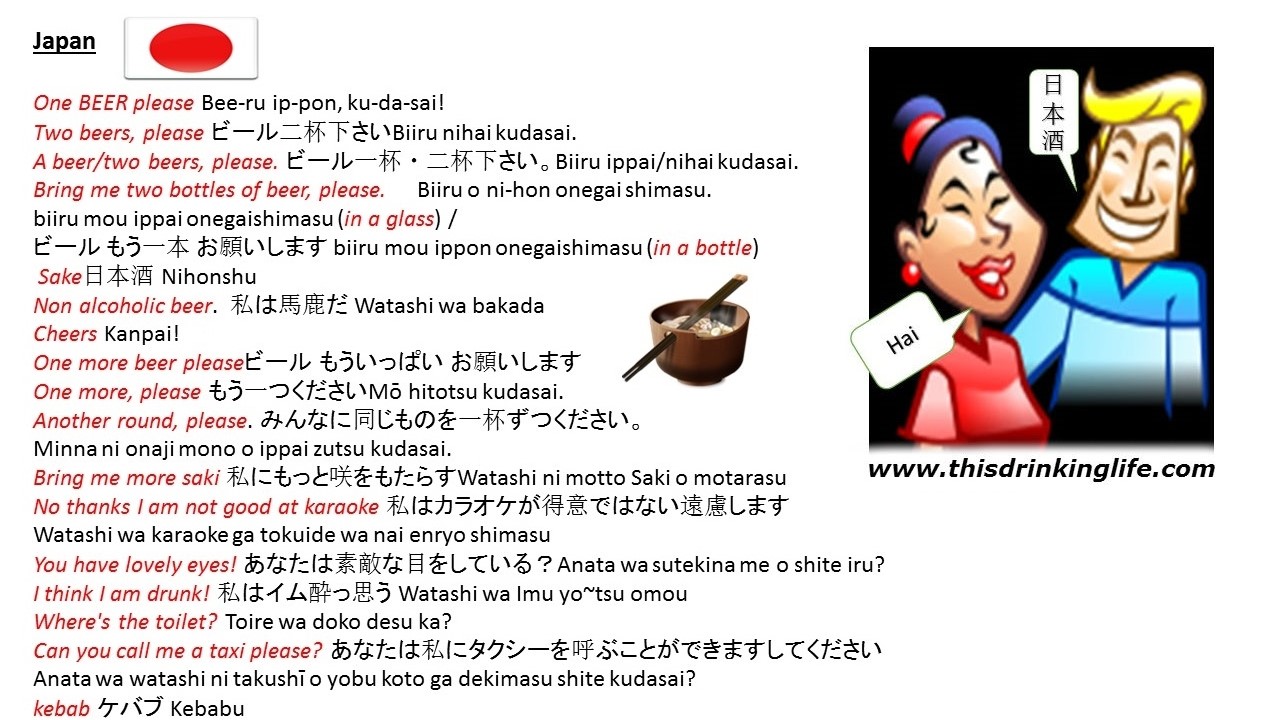
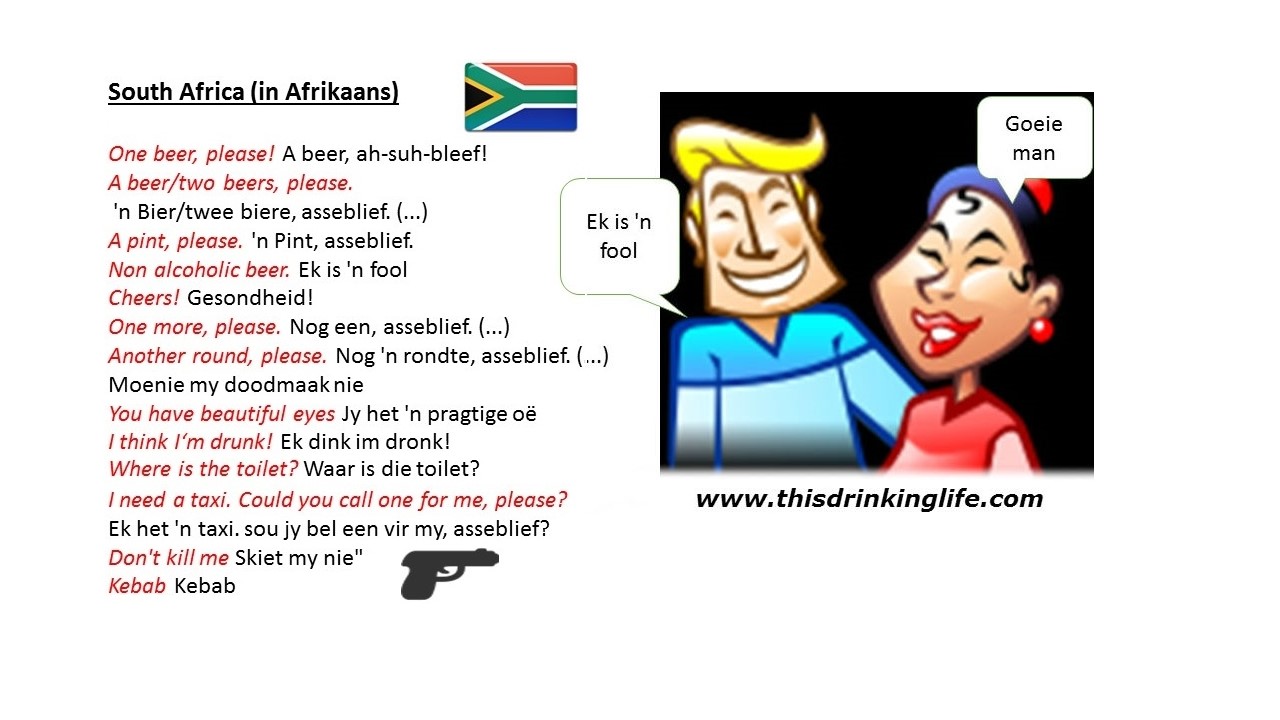
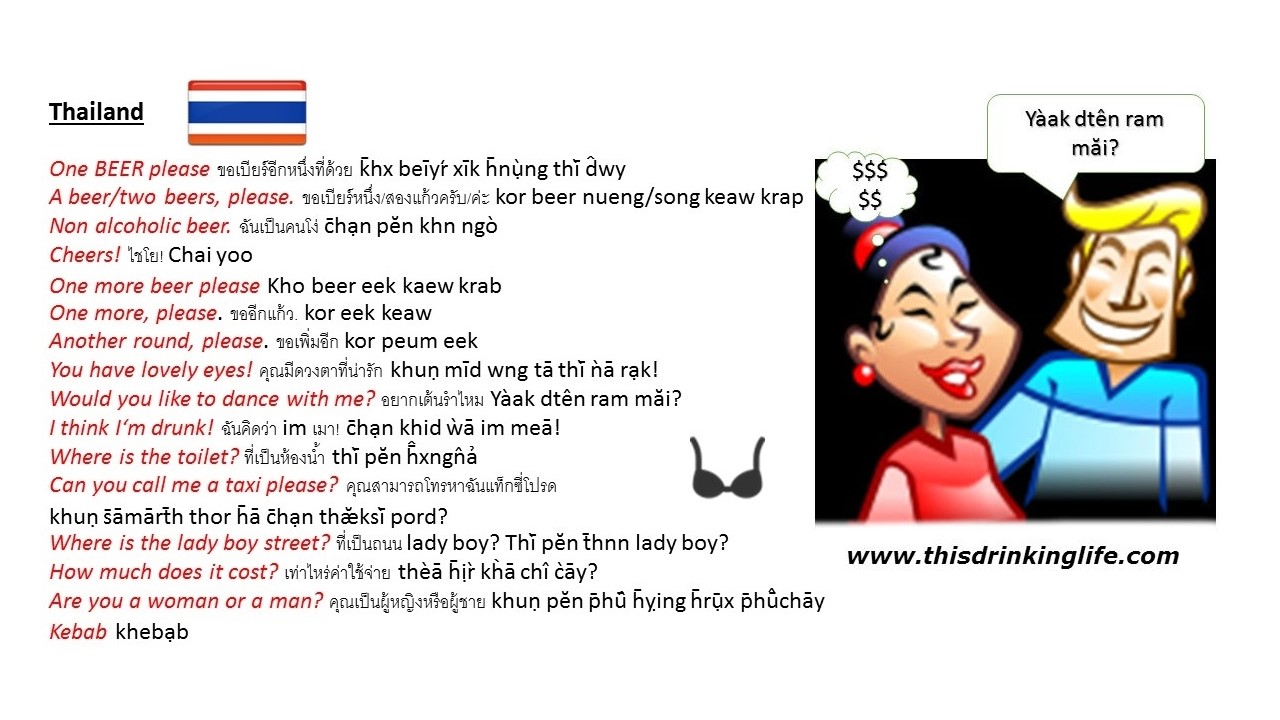
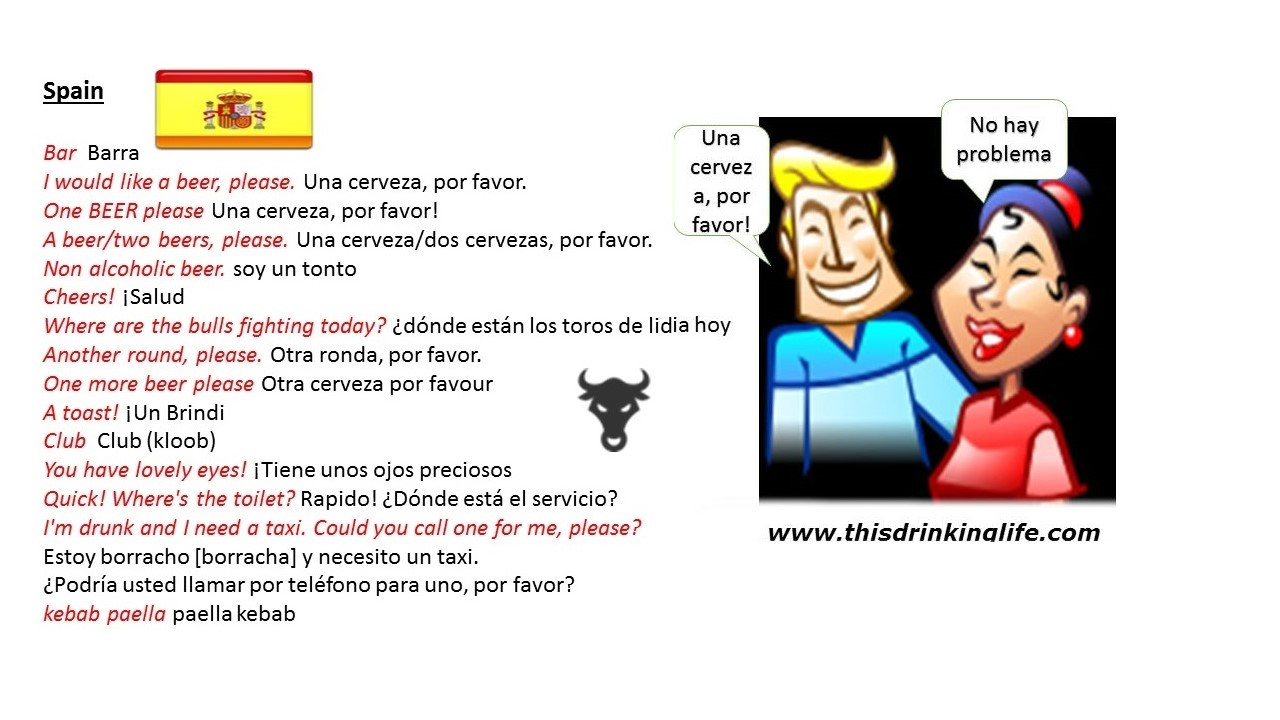
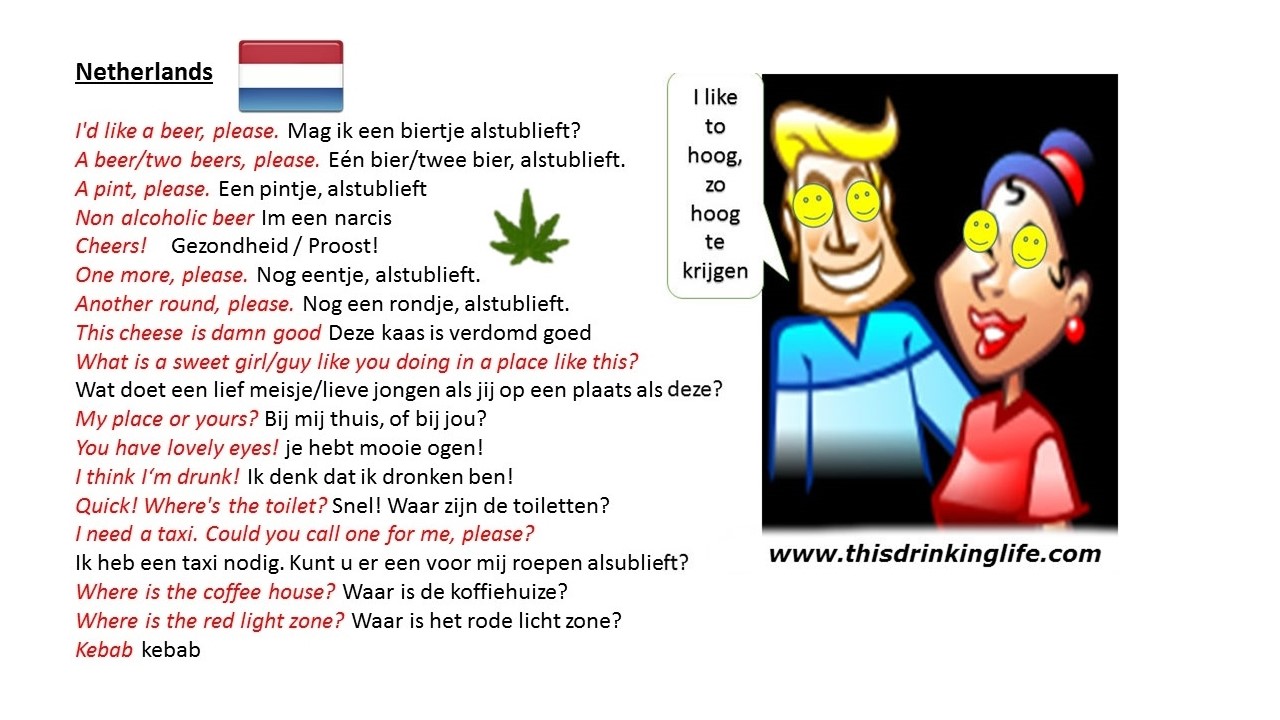
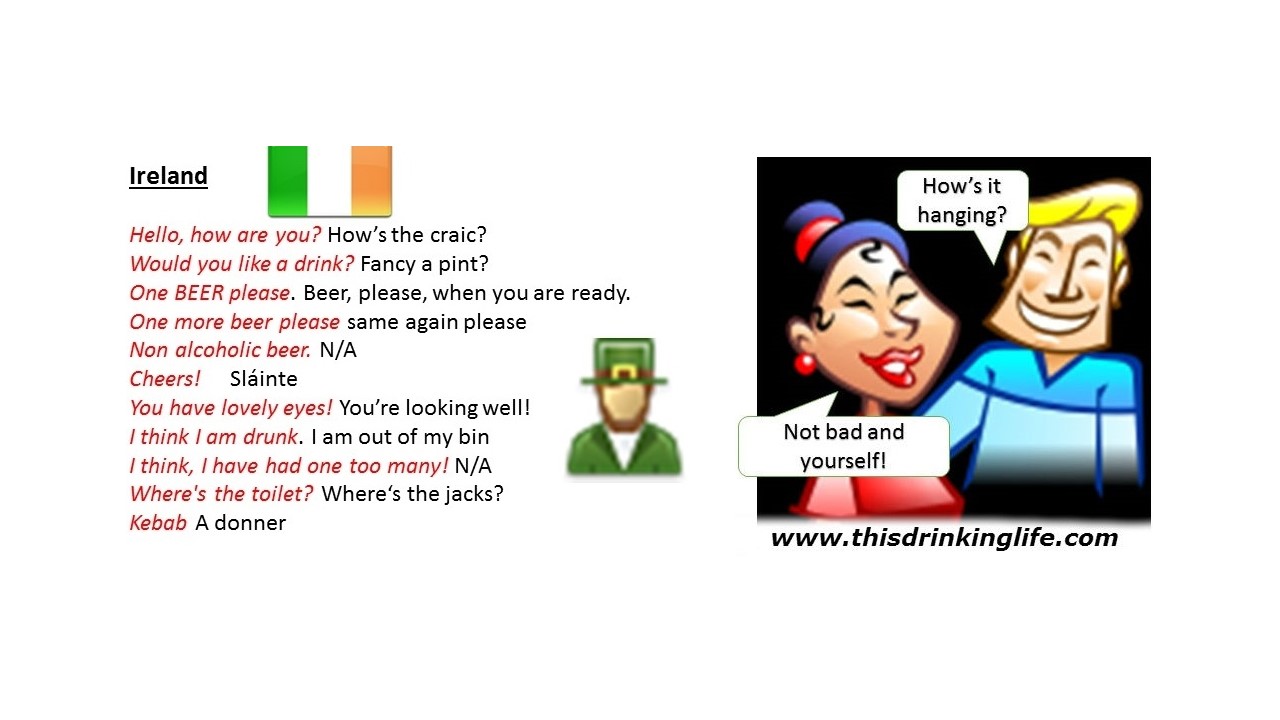
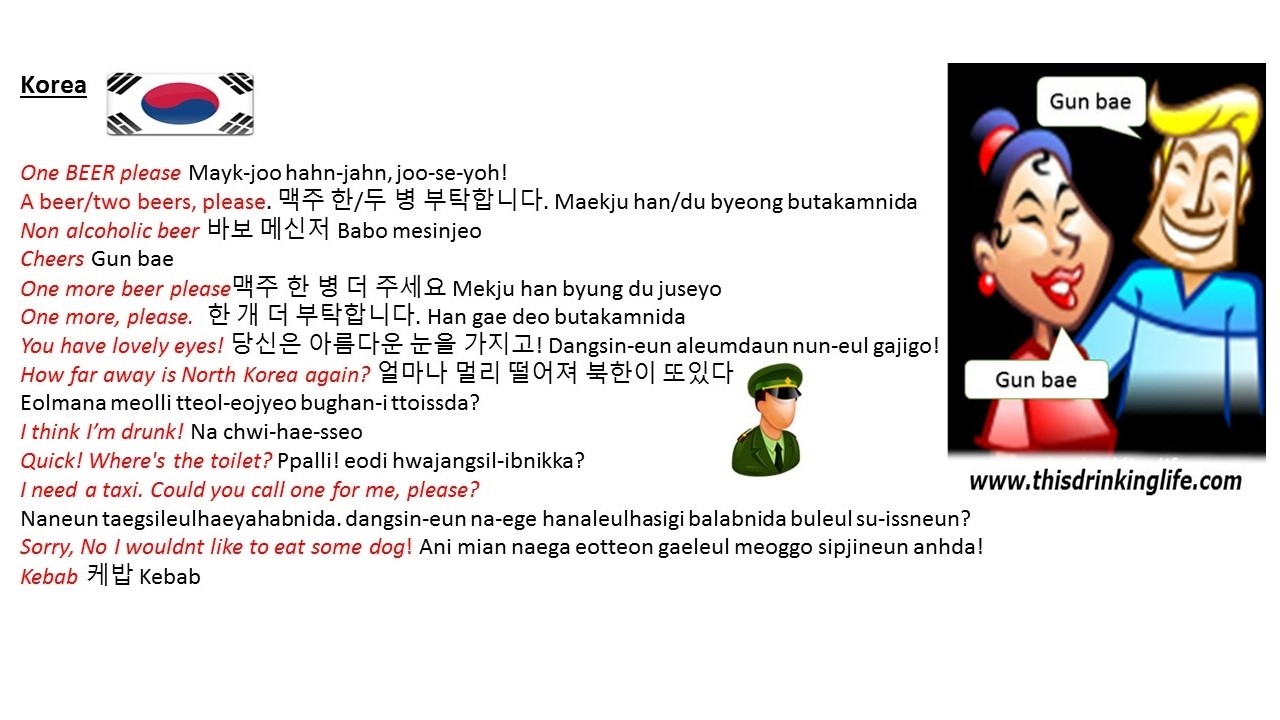
A Drinker’s Dictionary: How to Order Beer in Different Languages

When traveling abroad, one of the simplest yet essential skills is knowing how to order a beer. Whether you’re in a bustling German beer hall, a cozy Spanish tavern, or an Irish pub, you want to blend in and avoid the awkwardness of struggling with the local language. Fortunately, technology has provided us with a handy solution. Some bright sparks have invented the world’s first beer-ordering app, designed to translate the word “beer” into 59 different languages, and is now here to save you from those embarrassing moments at the bar.

http://www.dailymail.co.uk/sciencetech/article-2344354/Worlds-beer-ordering-app-translates-beer-59-different-languages.html

Not to be outdone, we at ThisDrinkingLife have created “A Drinker’s Dictionary“ for popular destinations, including Germany, China, Japan, South Korea, and many more. Whether you’re in Spain, France, Italy, or even Ireland, you’ll be able to order a cold one without hesitation. Just don’t forget—Google Translate might give you a hand, but don’t rely on it in tricky situations!

Why It Matters

Having a beer abroad is a cultural experience. Being able to ask for it correctly can make you feel more connected to the locals. In our dictionary, you’ll find key phrases for ordering beer in countries like Germany (“Bier”), Spain (“Cerveza”), France (“Bière”), and even Ireland (“Beoir”).

A cut out and keep guide to better drinking abroad.

Use Facebook to Comment on this Post

Brendan Behan “I only drink on two occasions—when I’m thirsty and when I’m not”

Hell Raiser *8 Brendan Behan

Brendan Behan

This months hell raiser was written by the smart fella’s writing for the excellent blog Londoncelticpunks, who gave us kind permission to reproduce the article here


REMEMBERING BRENDAN BEHAN 1923-1964

 ‘Streams Of Whiskey’ – The Pogues

“Last night as I slept
I dreamt I met with Behan
 Shook him by the hand and we passed the time of day
When questioned on his views
On the crux of life’s philosophies
He had but these few clear and simple words to say

I am going, I am going
Any which way the wind may be blowing
I am going, I am going
Where streams of whiskey are flowing

I have cursed, bled and sworn
Jumped bail and landed up in jail
Life has often tried to stretch me
But the rope always was slack
And now that I’ve a pile
I’ll go down to the Chelsea
I’ll walk in on my feet
But I’ll leave there on my back

Oh the words that he spoke
Seemed the wisest of philosophies
There’s nothing ever gained
By a wet thing called a tear
When the world is too dark
And I need the light inside of me
I’ll go into a bar and drink
Fifteen pints of beer”

written by Shane MacGowan

Video of song here>http://youtu.be/hkGMH-mIc4k

Brendan Behan

The “rough” look

If there was ever a writer who could symbolise celtic-punk it would be Brendan Francis Behan. The man who, along with Luke Kelly, our very own Shane MacGowan seems to taken most inspiration from. Today is the 91st anniversary of his birth so we thought we’d enlighten those of you who do not know him or his works.

Most famous for his earthy satire and political opinions. While he was not in jail, or the pub, Behan worked odd jobs and wrote plays and stories that depicted the life of the working classes. Several of his books were banned in Ireland and he spent most of the years from 1939 to 1946 in English and Irish penal institutions on political charges. However, his writings are lively, full of humour, and, somewhat surprisingly, do not show signs of anger or bitterness toward the world at large.

“… it was not really the length of sentence that worried me–for I had always believed that if a fellow went into the I.R.A. at all he should be prepared to throw the handle after the hatchet, die dog or shite the licence–but that I’d sooner be with Charlie and Ginger and Browny in Borstal than with my own comrades and countrymen any place else. It seemed a bit disloyal to me, that I should prefer to be with boys from English cities than with my own countrymen and comrades from Ireland’s hills and glens.”

Early Life and Family Background

Born into inner-city Dublin he lived his childhood in the slums of the city. In spite of the surroundings, he did not end up becoming an unlettered slum lad. Much of his education was owed to his family, well-read, and of strong Republican sympathies. Behan’s family on both sides was traditionally anti-British. His uncle Peader Kearney was the author of the Irish national anthem, ‘The Soldier’s Song’. Another uncle, P.J. Bourke, managed the Queens Theatre in Dublin, and one of Bourke’s sons was the dramatist Seamus de Burca. Brendan’s brother Dominic became a dramatist, too, and gained also success and a balladeer and singer.

At Behan’s birth, his father, a housepainter and Republican activist, was being held in a British compound due to his involvement in the Irish uprising of 1916-1922. Behan’s mother had previously been married to another Republican, who had died during the influenza epidemic of 1918. Brendan attended Catholic schools until age 14, after which he left his studies and worked as a house painter. From the age of nine, he served in the Fianna, a youth organization tied to the IRA, and by the late 1930s, he was working as an IRA messenger boy.

Arrests and Imprisonment

In 1939, Behan was arrested in Liverpool on a sabotage mission following a deadly explosion in Coventry. He was sentenced to three years in a Borstal reform school for attempting to blow up a battleship in Liverpool harbor. After his release, he returned to Ireland, but in 1942, he was sentenced to 14 years for the attempted murder of two detectives. Behan served time at Mountjoy Prison and the Curragh Military Camp, until his release in 1946 under a general amnesty. He resumed house painting and joined Dublin’s literary underground, which included Patrick Kavanagh, Anthony Cronin, J.P. Donleavy, and Sean O’Sullivan.

In 1947, Behan was imprisoned again in Manchester, serving a short term for allegedly helping an IRA prisoner escape. Reflecting on the nature of political violence, Behan ironically noted that “the man with a big bomb is a statesman, while the man with a small bomb is a terrorist.

Stages of madness

During his years in prison, Behan started to write, mainly short stories in an inventive stylization of Dublin dialect. The Landlady was written at the Curragh. Gretna Green, about the execution of two Irishmen, was produced at the Queen’s Theatre as a part of a Republican commemorative concert. In 1955 Behan married Beatrice ffrench-Salkeld, a painter and the daughter of noted Dublin artist, Cecil Salkeld. The marriage did not stop him from continuing his self-destructive life-style, even after he was diagnosed as diabetic.

Behan’s best-known novel, Borstal Boy (1958), drew its material from his experiences in a Liverpool jail and Borstal. The young narrator progresses from a rebellious adolescent to greater understanding of himself and the world:

“There were few Catholics in this part of the world and the priest had a forlorn sort of a job but Walton had cured me of any idea that religion of any description had anything to do with mercy or pity or love.”

Behan also sailed intermittently on ships, as he had become a certified seaman in 1949. However, at the beginning of his career, Behan faced difficulties in getting his plays performed in Ireland. The Quare Fellow, based on his prison experiences, was initially turned down by both the Abbey Theatre and the Gate. Nevertheless, it eventually found success at the Pike Theatre Club in 1954, gaining critical acclaim. As a result, reviewers began to compare him to a new Sean O’Casey, and the play was transferred to London’s West End for a six-month run. The events of the play are set during the twenty-four hours preceding an execution, which is thought to have contributed to the eventual abolition of capital punishment in Britain. Additionally, Behan often attacked the false piety behind public attitudes toward issues such as sex, politics, and religion..

Behan found fame difficult. He had long been a heavy drinker describing himself on one occasion as

“a drinker with a writing problem”

and claiming

“I only drink on two occasions—when I’m thirsty and when I’m not”

and developed diabetes in the early 1960s. As his fame grew, so too did his alcohol consumption. This combination resulted in a series of famously drunken public appearances, on both stage and television.


Brendan Behan

In free flow

Among Behan’s other dramas are The Big House (1957), a radio play written for the BBC, and The Hostage  (1958), written in Gaelic under the title An Giall and set in a disreputable Dublin lodging house, brothel!,owned by a former IRA commander. This play, perhaps Behan’s most enduring work, was first produced in Irish at the Damer Hall in Dublin and then in London, Paris, and New York. It depicts events that surround the execution of an eighteen-year-old IRA member in a Belfast jail. The audience never sees him. He has been accused of killing an Ulster policeman and sentenced to be hanged. A young British soldier, Leslie Williams, is held hostage in the brothel. After the IRA prisoner has been executed, Leslie is eventually killed in a gunfight, when the police attack the place. Before it a love story develops between Leslie and Teresa, a young girl, who promises never to forget him. In the finale Leslie’s corpse rises and sings:

The bells of hell 
Go ting-a-ling-a-ling 
For you but not for me. 
Oh death, where is thy sting-a-ling-a-ling 
Or grave thy victory?

In his dramas Behan used song, dance, and direct addresses to the audience. Occasionally the author himself would appear in the audience and criticize the actors and shout instructions to the director. Several of Behan’s works were staged at Joan Littlewood’s Theatre Workshop, which left deep impact on modern theatrical style. Littlewood viewed the theatre as a collective and revised much of his script for The Hostage-the author himself approved all changes.

Notoriety and critical attention came to Behan in the mid-1950s and contributed to his downfall, fuelled by his prolonged drinking bouts and belligerent behaviour.

“An Anglo-Irishman only works at riding horses, drinking whisky and reading double-meaning books in Irish at Trinity College”

Brendan Behan wrote The Hostage, his last major drama, while his final books consisted mainly of anecdotes transcribed from recordings. Like Dylan Thomas, Americans lionized Behan to the point of exhaustion. Unfortunately, his lifelong battle with alcoholism cut his career short, and he died in a Dublin hospital on March 20, 1964, at the young age of 41. The IRA gave Behan an honorary guard, and several newspapers described his funeral as the largest since those of Michael Collins and Charles Stewart Parnell. . According to the United States Library of Congress, Behan remains one of the most important Irish literary figures of the 20th century. Although he left behind a lasting legacy, one can’t help but wonder what more he might have achieved if he had managed to lay off the bottle.

Brendan Behan

On the banks of the Royal Canal

‘BRENDAN BEHAN’S DUBLIN’: RTE documentary from 1966.

 SELECTED WORKS:

  •  The Quare Fellow,1954 – Film adaptation in 1962, dir. Arthur Dreifuss, starring  Patrick McGoohan.
  • Borstal Boy, 1958
  • Brendan Behan’s Island – An Irish Sketchbook, 1962
  • Hold Your Hour and Have Another, 1963
  • The Scarperer, 1964
  • Brendan Behan’s New York, 1964
  • Confessions of an Irish Rebel, 1965
  • After The Wake, 1981
  • The Letters of Brendan Behan, 1991
  • The King of Ireland’s Son, 1997

The Auld Triangle…

Video here>http://youtu.be/aa7birRBmNM

A hungry feeling, came o’er me stealing

And the mice they were squealing in my prison cell

And that auld triangle, went jingle jangle

All along the banks of the Royal Canal.

Oh to start the morning, the warden bawling

Get up out of bed you, and clean out your cell

And that auld triangle, went jingle jangle

All along the banks of the Royal Canal.

Oh the screw was peeping and the lag was sleeping

As he lay weeping for his girl Sal

And that auld triangle, went jingle jangle

All along the banks of the Royal Canal.

On a fine spring evening, the lag lay dreaming

And the seagulls were wheeling high above the wall

And that auld triangle, went jingle jangle

All along the banks of the Royal Canal.

Oh the wind was sighing, and the day was dying

As the lag lay crying in his prision cell

And that auld triangle, went jingle jangle

All along the banks of the Royal Canal.

 In the female prison there are seventy women

And I wish it was with them that I did dwell

And that auld triangle, went jingle jangle

All along the banks of the Royal Canal.

Original article here

Use Facebook to Comment on this Post

Monkey business

Monkeys and Beer: The Surprising Connection

Monkeys and Beer: The Surprising Connection

Sometimes when we get completely off our face, we might act like a monkey. But what happens when monkeys and beer mix, and the monkeys themselves get drunk?

Well, there have been two recent studies that delve into monkeys and beer, where scientists provided monkeys with massive quantities of alcohol—all for free! Bastards! Yes, this is what scientists are up to these days. Lucky monkeys, you might say. But anyway, let’s take a closer look at these very important studies about monkeys and beer.

STUDY NUMBER ONE: The search for the ‘alcohol gene’

Scientists have discovered that monkeys, just like the humans, those other primates, also have developed a taste for alcohol – and behave in a similar fashion when under its influence.

St Kitts and Nevis islands

St Kitts islands

Research on St Kitts Islands

Research into their drinking habits was carried out on the Caribbean island of St Kitts on a group of green Vervets. The Vervets were introduced to the island in the 17th century when they were brought over with slaves from Africa. St Kitts was chosen for the project because the wild Vervets had established a liking for alcohol from the fermented sugar cane lying around aplenty in the fields of the rum-producing island.  In their hunt for alcohol, they’ve learned to steal alcohol from bars, hotels and napping tourists. Scientists are using the monkeys – which share 96 per cent of their genetic make-up with humans – to help to search for clues to the nature of human drinking and to discover whether some people have an alcohol genes in their hereditary makeup.

See Video (might be blocked in some countries, drat!)

Categories of Monkey Drinkers

The scientists took 1000 vervet monkeys and plied them with alcohol, kept them in a social group and directed research into their drinking habits. Leading the experiments were Frank Ervin, a professor of psychiatry, and Roberta Palmour, a professor of human genetics, both from McGill University in Montreal.

Unfortunately for the monkeys the experiments were not set in the local pub but in controlled cages, where they were given a choice of non-alcoholic, diluted alcoholic and neat drinks. They found that the monkeys’ drinking behaviours were oddly similar to humans: that the animals split into four core categories: binge drinker, steady drinker, social drinker and teetotaller

The Four Drinking Categories

Social drinkers: The majority of the monkeys, drank in moderation and only when they are in the company of other monkeys and not before lunch, prefer their alcohol to be diluted with fruit juice.

Regular drinkers: Fifteen per cent of the monkeys were regular drinkers and prefer their alcohol neat or diluted with water not sweetened or watered down with fruit juice: Funnily enough steady drinkers do very well in social groups, and are good leaders. They keep order well and they’re very dominant. This type of alcoholic monkey is a very efficient animal.  In human terms Winston Churchill perhaps!

Teetotallers: Fifteen percent of the monkeys prefer little or no alcohol. Bastards!

Binge drinkers: Five per cent are classed as “seriously abusive binge drinkers”.  They drink fast, fight and devour as much as they can until losing consciousness. As in humans, most heavy drinkers are young males, but monkeys of both sexes and all ages like to drink. If this group has unobstructed access to alcohol, they will drink themselves to death within 2/3 months. What makes them different to the regular drinkers is not the quantity of alcohol intake, both can be high, but in the way they drink, their drinking patterns.

The Impact of Alcohol on Monkeys

So what does this experiment prove? Prof Ervin said: “The parallels between the Vervets’ behaviour and human behaviour are striking. A cageful of drunken monkeys is like a cocktail party. You have one who gets aggressive, one who gets sexy, one who thinks everything’s funny and one who gets really grumpy. The binge drinkers gulp down the alcohol at a very fast rate and pass out on the floor. The next day they do it all over again.”

Monkeys drinking beer

On the piss

So just like humans, monkeys abuse alcohol, and suffer all the negative effects that booze can bring to society – idleness, violence, theft, no frills sex, and the rest.  Additionally, the study shows vervet monkeys’ alcohol use has a genetic component. For many years, alcoholism in humans was thought to be purely a learned behaviour — the result of environmental factors. But this study, and others like it, indicate that in humans, alcohol addiction has a genetic component: it has a tendency to run in families. Daddy monkey passes it down to the little ones.

Man is said to have started drinking alcohol in prehistoric times when scouring the forest for sweet fruit, man liked what he tasted when the fruit fermented and reacted with natural yeasts. Is this one reason why we developed our brains, developed a creativity and deep understanding of life? Is this how first early music/paintings started? Or dare I say it religion. I mean you have to be off your rocker to believe in talking snakes and the like.  Is it only a matter of time before the Vervets start penning some tunes? Maybe the scientists could have given them some typewriters when they were crammed into them cages? Only saying like!

STUDY NUMBER TWO: Boozing adolescent monkeys’ reveal how binge-drinking harms the adolescent brain.

Binge drinking is increasing amongst the youths, and new research has shown long-lasting damage to an important area in the brain after excessive alcohol consumption, suggesting binge drinking could seriously affect the memories of adolescents. Post-mortems of binge-drinking adolescent monkeys have produced the best evidence yet that heavy drinking at an early age can do lasting damage to the brain. Monkey and human brains develop in the same way, so the finding suggests that similar effects may occur in human teenagers.

The Focus of the Study

Scientists and a team of researchers at the Scripps Research Institute at La Jolla, California led by Chitra D. Mandyam intended to determine the negative effects of binge alcohol consumption on the hippocampus area of the brains of adolescent macaque monkeys. The hippocampus, not hippopotamus, is necessary for short and long term memory, impulse control and ability to make decisions. The hippocampus is moreover a place where the adult brain can produce new brain cells.

The Experimental Process

The research team observed a group of seven male adolescent monkeys. They gradually increased the alcohol intake from 1% to 6% over the first 40 days. This approach aimed to get the monkeys drunk while studying their brain development. After 40 days, the researchers switched three monkeys to non-alcoholic drinks. The other four continued to receive the 6% alcohol brew for an hour each day over the next 11 months

The Results: How Alcohol Affects the Brain

“Monkeys love to drink. They’re like humans,” Mandyam says. These four monkeys were intoxicated daily, reaching a fairly high blood alcohol level (BAL) of 0.1 to 0.3 (about 10/12 bottles of beer). In the last two months of the research, they stopped receiving alcohol. After 11 months of alcoholic cocktails, the researchers dissected their brains for examination. Nice.

The results revealed a dramatic decrease in stem cells in the hippocampus region of the binge-drinking monkeys, along with reduced development of new neurons.

“You’re messing with brain plasticity,” Mandyam said. “When adolescence subdues these cells, the chances of producing normal brain cells later in life decrease. It’s very devastating to see how binge drinking harms the brains of adolescents.”

“What is important for the public to know is that this type of drinking can kill off stem cells.” This loss could result in damage to memory and spatial skills, she adds. Mandyam thinks that this degeneration could have long-term effects and provide a mechanism for why bingeing teens are more likely to develop alcohol dependence as adults. “It’s also important to recognize that binge drinking may produce adverse consequences on the brain regardless of age.”

Monkeys drinking beer

Hangover cure?

Since monkeys’ brains closely resemble human brains, researchers believe that the study’s findings likely apply to human adolescents as well. Regular binge drinking in adolescents might cause severe, long-lasting damage to the neural stem cells in their brains. This damage could lead to memory problems and potentially contribute to mental illness. The research suggests that the long-term negative effects of binge drinking on adolescent brains could be even more serious than previously thought.

To be clear, these monkeys consumed roughly 10-12 bottles of beer daily, every week for nearly a year. DAILY! That’s quite a caveat! No wonder their brains turned to mush!

Ethical Concerns and Reactions

Also animal welfare groups condemned the experiments. Plying animals with alcohol in the name of science is irresponsible the argument goes. Better than as part of meal or a new coat? Could be worse me thinks. I am also guessing that if they had asked to use humans they wouldn’t have had a problem finding willing participants for an experiment like this, all in the name of advancing science,

EDMUNDO!

Edmundo and his pet monkey

Edmundo and monkey

Of course when someone mentions monkeys and alcohol to me I immediately remember Edmundo, the “Animal”, the nutcase who used to be play football and was a regular for the Brazilian national team.

The striker threw a party in Rio for his son’s first birthday, hiring a chimp and two elephants from a local circus to boost the fun. Edmundo personally experimented by giving the monkey beer and whisky, nearly killing it with alcohol poisoning. When a paper published pictures of this, it landed him in hot water. Animal rights groups erupted in fury, leading to his court appearance, a $1,000 fine, and narrowly escaping six months of prison time.

Sources and Links:

R.M. Palmour and F.R. Ervin.

Alcohol consumption in vervet monkeys: biological correlates and factor analysis of behavioural patterns.

Chitra D. Mandyam, Michael A. Taffe, Roxanne W. Kotzebue, Rebecca D. Crean, Elena F. Crawford, Scott Edwards

Long-lasting reduction in hippocampal neurogenesis by alcohol consumption in adolescent nonhuman primates


Use Facebook to Comment on this Post